A water-damaged phone should be professionally diagnosed as soon as possible if it will not charge, becomes unusually hot, shows screen or camera problems, restarts unexpectedly, was exposed to saltwater or a sugary drink, or contains important data you cannot afford to lose. Even when the phone appears to work normally, liquid can remain inside or leave residue that causes corrosion later.
At Conner Phone Fix, we treat liquid exposure as a diagnostic issue first. Water damage can affect the battery, charging port, display, cameras, speakers, connectors, or logic board. A professional water damage diagnostic service can help identify problems before they become more severe.
Why Should Water Damage Be Diagnosed Quickly?
Liquid damage is unpredictable because symptoms do not always appear immediately. A phone may keep working after a spill and then develop charging problems, battery drain, overheating, camera faults, or no-power symptoms days later.
Moisture is only part of the problem. Tap water, rain, coffee, soda, juice, and saltwater can leave minerals, sugars, salts, or other contaminants behind after the visible liquid dries. Those residues can create corrosion or unstable electrical connections.
Early diagnosis gives a technician a better chance to identify contamination, damaged connectors, battery problems, or board-level faults before the device deteriorates further.
When Should You Stop Using the Phone Immediately?
Some symptoms should be treated as urgent.
If the device becomes too hot to hold comfortably, develops a chemical or burning smell, swells, or begins separating at the screen or back cover, stop using and charging it. These signs can indicate battery or electrical damage.
You should also stop powering the phone on repeatedly if it was heavily exposed to liquid and now behaves unpredictably. Repeated charging and restart attempts can place additional stress on contaminated components.
If you need guidance on the first steps after an accident, see our guide on what to do immediately after dropping your phone in water.
Does Saltwater or a Sugary Drink Require Professional Diagnosis?
Yes. Saltwater, soda, juice, coffee, sports drinks, and other contaminated liquids are generally more concerning than clean water.
Salt is highly conductive and can accelerate corrosion. Sugary drinks leave sticky residue around connectors, buttons, charging components, speakers, and circuits after the liquid evaporates.
A phone that falls into seawater or is soaked with a sweet drink should not be considered safe simply because it still turns on. Professional inspection matters because the contamination can affect both repair and long-term reliability.
What If the Phone Still Works Normally?
A working phone can still have liquid damage.
The device may turn on, display normally, and seem fine immediately after exposure. Then charging becomes intermittent, the battery drains quickly, the microphone fails, or the phone starts restarting.
Our article on why a phone can work at first and fail days after water exposure explains how delayed corrosion can create problems after an apparently successful recovery.
If exposure was significant, diagnosis can still be worthwhile even when the device currently works.
When Do Charging Problems Point to Water Damage?
Charging problems after liquid exposure are a strong reason to have the phone inspected.
You may notice the cable no longer connects consistently, charging stops and starts, the phone becomes hot while plugged in, or the battery percentage barely increases.
The issue may be limited to contamination in the charging port, but it can also involve the battery, connector, charging circuit, or logic board.
Avoid repeatedly testing chargers if the device becomes hot or behaves abnormally. A proper diagnostic can separate a port problem from deeper electrical damage before a repair is recommended.
When Should Screen or Camera Problems Be Checked?
Liquid can affect displays, touch sensors, camera modules, and their internal connections.
Warning signs include flickering, lines, dark patches, incorrect colors, ghost touch, delayed response, or a display that stays black while the phone still rings. Camera problems can include fogging under the lens, a black preview, inability to focus, shaking, or cameras that stop opening.
If these symptoms appear after liquid exposure, inspection helps determine whether the screen or camera itself failed or whether corrosion is affecting the connection or board.
What If Important Data Is Stored on the Phone?
Professional diagnosis becomes more important when the phone contains photos, authentication apps, work files, contacts, or other information that is not backed up.
Modern phones use encryption, so the original board often must function well enough for the phone to unlock and access its data.
Tell us before repair if data preservation is the priority. That can affect how we approach diagnosis and which repairs are attempted first.
Avoid unnecessary DIY disassembly when the information matters. Accidental damage can make recovery more difficult.
Should You Put the Phone in Rice Before Bringing It In?
No. Putting a wet phone in rice is not a professional repair method.
Rice cannot remove corrosion, clean conductive residue from internal components, or confirm whether moisture remains underneath connectors and shields. Small particles can also enter ports and openings.
Allowing the exterior to dry is reasonable, but the absence of visible moisture does not prove the inside is undamaged.
If you are considering rice, read our explanation of why putting a wet phone in rice does not reliably fix liquid damage.
What Does a Professional Water-Damage Diagnostic Check?
At Conner Phone Fix, we begin by asking what liquid was involved, how long the phone was exposed, whether it remained powered on, whether it was charged afterward, and which symptoms appeared.
Depending on the phone’s condition, we may evaluate the charging port, battery behavior, screen, touch response, cameras, speakers, microphones, buttons, and power system.
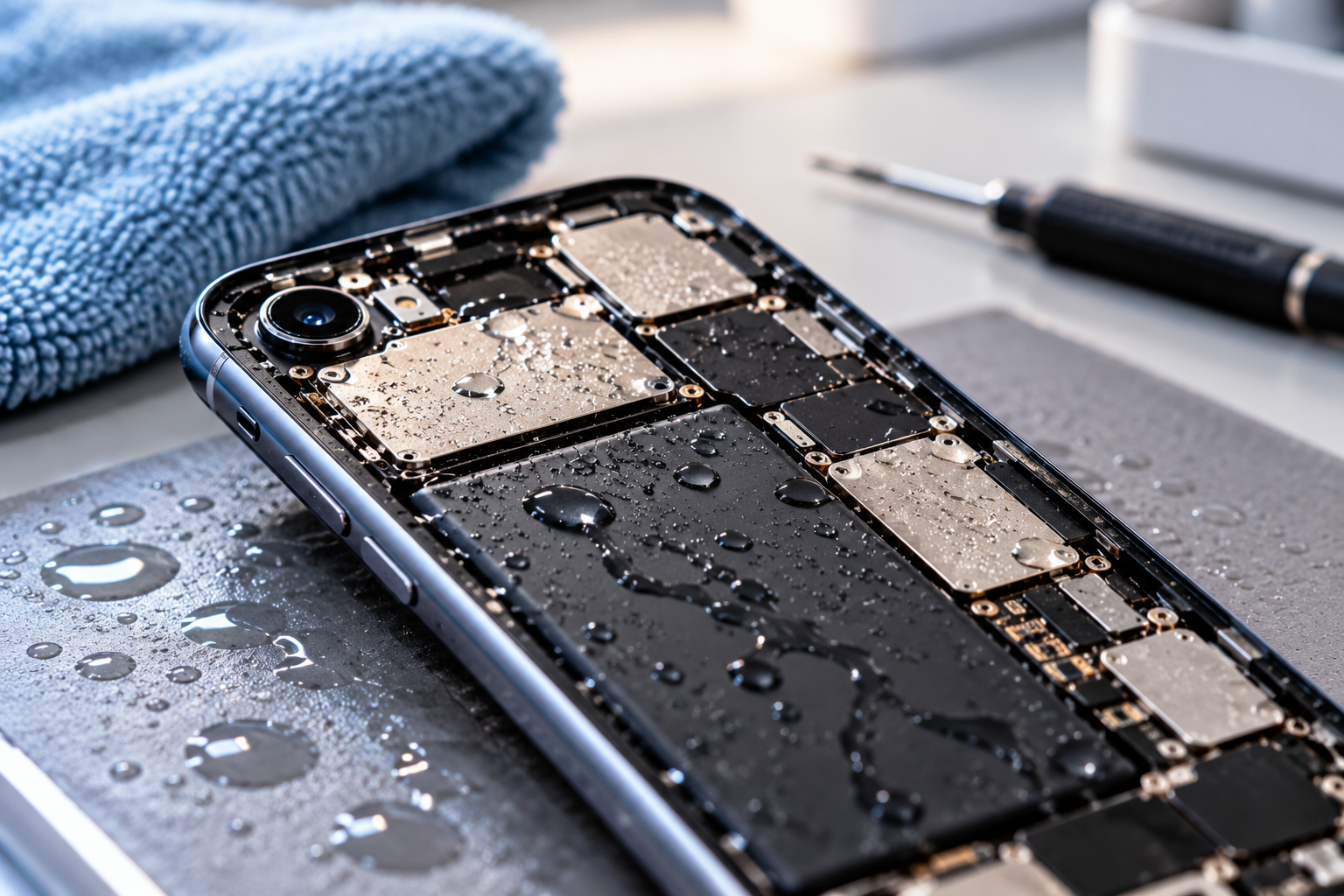
When necessary, the device may be opened so internal connectors and logic-board areas can be inspected for residue, corrosion, or damaged components.
The goal is to determine whether the problem can be resolved with cleaning or a replaceable part, or whether more advanced board-level diagnosis is required. This helps avoid replacing parts based only on symptoms.
Can a Water-Damaged Phone Still Be Repaired?
Many can, but repairability depends on the liquid, exposure time, corrosion, battery condition, and which circuits were affected.
Some phones may need a battery, charging port, screen, speaker, camera, or another replaceable component. Others may require microsoldering or board-level repair. Severe corrosion can make a reliable repair impractical.
That is why we do not recommend deciding that a device is either fine or beyond repair based only on whether it turns on.
For a deeper explanation, see our guide on whether a water-damaged phone can still be repaired.
Get a Water-Damaged Phone Diagnosed in Detroit
If your phone has been exposed to water or another liquid and you are seeing charging problems, overheating, screen issues, camera faults, rapid battery drain, random restarts, or no power, it is time to have the device evaluated.
Conner Phone Fix provides phone repair services and liquid-damage diagnostics for customers in Detroit and surrounding areas. We can inspect the phone, explain what we find, and recommend the appropriate next step based on the actual condition of the device.
Understanding what the liquid affected helps guide repair, data preservation, and continued use.
Contact Conner Phone Fix to book an evaluation for a water-damaged phone.